








Contacts

92 Bowery St., NY 10013

thepascal@mail.com

+1 800 123 456 789

Training Pastors

When the Center Shifts: Lessons from a Global Church

There I was, sitting in one of my favorite coffee haunts, dark roast in hand, chatting with Dr. Phillip Wandawa.

Phillip is a pastor, a theologian, and the Principal of Kampala Evangelical School of Theology (KEST). A few years earlier, I’d visited KEST as my church explored the possibility of partnering with a Ugandan institution. We didn’t have a specific plan in mind—just the desire for something deeper than the usual “we’ll send a check and call it a partnership” model. We wanted something mutual, something relational. Something where both sides gave—and both sides grew.

Phillip hadn’t been in Uganda at the time of my first visit, so this was our first real conversation. We talked briefly about how my church might support KEST. Then I asked a question that shifted the tone:

“What do you think my church could learn from this partnership?”

Not what we could do for them, but what they could teach us.

There was a pause. Not long, but long enough to suggest Phillip wasn’t used to hearing that question—especially from a Westerner. The unspoken reality was clear: most of the American churches and leaders who had come before me brought their financial support—and their assumptions. They assumed that they not only had the resources, but also the superior theology, strategy, and spiritual maturity. The idea that an American church might learn from a Ugandan one? Rare.

But it shouldn’t be.


The Shift in Global Christianity

Phillip knows his stuff. He shared deeply insightful thoughts about African spirituality, the contextual growth of the church in Uganda, and the role of African theologians in shaping global theology. What struck me most was the clarity with which he described something I’ve since come to see firsthand:

Christianity isn’t dying. It’s shifting.

While the headlines in the West often focus on church decline and rising secularism, the reality is that Christianity is thriving—just not always where we’re used to seeing it.

Back in 2013, the Center for the Study of Global Christianity (CSGC) at Gordon-Conwell Seminary described what they called “a great shift of Christianity to the Global South.” At the beginning of the 1970s, 40% of Christians lived in Europe, 17% in North America, and just 11% in Africa. By 2020, Africa was projected to hold nearly 25% of the world’s Christians. In fact, by 2018, 66% of Christians lived in the Global South.

Let that sink in. The majority of Christians in the world today do not live in the West.


Counting Christians

Now, let’s be honest—different sources define “Christian” differently. The World Christian Database (which supplies much of the data for the CSGC) casts a wide net, including Catholics, Protestants, Orthodox believers, and even Mormons. Other studies, like Operation World, narrow the scope to focus on Evangelical or practicing Christians.

But no matter how you slice it, the trend remains: the Global South—Africa, Asia, Latin America—is home to more Christians than the Global North. And the gap is growing.

This reality is not just a geographic shift. It’s a paradigm shift—one that challenges how we think about theology, leadership, and mission.


A Shifting Church at Home, Too

Even within the United States, the story is changing.

A Pew Research study from several years ago reported that while overall attendance in mainline Protestant churches dropped by 5 million between 2007 and 2014, the percentage of non-white attendees actually rose—from 9% to 14%. Evangelical churches saw a similar trend: non-Anglo representation grew from 19% to nearly 25% during the same period.

Among the oldest generation of Americans (65+), nearly two-thirds identify as white Catholics, Protestants, or Evangelicals. Among 18- to 21-year-olds? Just 28%.

In short: the American church is becoming more global, more diverse, and less Anglo.

Philip Jenkins, an expert in global Christianity, predicts that by 2050 only one in five Christians worldwide will be white. This isn’t the future of the church—it’s already happening. And while many American churches remain unaware or unprepared, the rest of the world is not waiting for us to catch up.


Reverse Mission

One of the most fascinating trends in recent years is the rise of missionaries from the Global South.

In 2010, the United States sent more missionaries than any other country—about 127,000. But when you look at missionaries per capita, the U.S. dropped to ninth place. Countries like Singapore, South Korea, and Palestine sent far more missionaries per church member.

Even more surprising? The United States also received more missionaries than any other nation—over 32,000. Many of these missionaries come to serve diaspora communities or to plant churches in cities with high immigrant populations. Others come simply because they feel called to bring the gospel to America.

Imagine that: African and Asian missionaries bringing the gospel back to the land that once sent missionaries to them.

It’s humbling. And it’s powerful.


Migrants, Culture, and Faith

Migration is a huge part of this story.

In 2017, Pew estimated that nearly 50 million people living in the U.S. were born in another country. Other research suggests that about half of global migrants identify as Christians. That means around 25 million Christians living in the U.S. were born somewhere else.

These believers bring their faith with them—but they also bring their culture, their perspective, and their theology. They are not empty vessels waiting to be filled with Western ideas. They are already shaped by their own walk with God—and they have much to teach us.


Challenging the Western Lens

For centuries, Christian theology has been shaped primarily through a Western lens—philosophically rooted in Greek logic and Roman law. Those frameworks gave us incredible depth, but they also formed a kind of theological tunnel vision.

Andrew Walls, the renowned Christian historian, put it this way:

“The most striking feature of Christianity at the beginning of the third millennium is that it is predominantly a non-Western religion. … We have long been used to a Christian theology that was shaped by the interaction of Christian faith with Greek philosophy and Roman law. … These forms have become so familiar and established that we have come to think of them as normal and characteristic forms of Christianity.”

We’ve become so accustomed to our own way of thinking that any deviation can feel “unorthodox”—when in reality, it may simply be unfamiliar.

Western Christianity tends to emphasize individualism over community and the rational over the spiritual. But those values aren’t universal. In much of the Global South, community and spirituality take center stage in ways that challenge and enrich the faith.

Wesley Granberg-Michaelson writes:

“The truth is that the glasses of the Western Enlightenment that have framed our view of the world now obscure reality more than reveal it.”

It’s time we considered trying on a new pair of lenses.


Moving Beyond Western Theology

The vast majority of Christian books, seminaries, and theological frameworks still come from older, white, Western men (and yes, I’m aware of the irony of that sentence coming from someone who fits that description). But that is starting to change—slowly.

Voices from Africa, Asia, and Latin America are rising. Some of them are in the academy, publishing books and writing curricula. Others are pastors, missionaries, and local leaders doing profound theology from the ground up.

But if you’re waiting for those voices to be handed to you, you may be waiting a long time. We have to seek them out. We have to ask questions, read unfamiliar authors, build relationships across cultures, and listen—really listen—with humility.


So What Now?

What does all of this mean for the church in the West?

It means that we’re no longer the center.
It means that we have as much to learn as we have to teach.
It means that partnerships—real partnerships—are the way forward.

Back in that coffee shop with Dr. Wandawa, I was reminded that humility isn’t just a personal virtue—it’s a missional strategy. We grow stronger when we learn from others. And the church grows deeper when we embrace what God is doing in places we never expected.

If we want to stay in step with the Spirit, we must be willing to learn from the global church.

We have brothers and sisters all over the world with wisdom, faith, and courage that we need.

So let’s stop assuming we have all the answers.
Let’s stop thinking mission only flows in one direction.
Let’s stop talking at the global church—and start listening to it.

There’s a lot to learn. And the conversation has only just begun.

Training Pastors

Discipleship in a Digital Age: Rethinking Church in the Era of Electronics

Every year, the numbers get harder to ignore. According to the latest research, the average American now spends nearly twelve hours a day interacting with a digital device.

At first, that sounds absurd—some stat pulled out of thin air by a professor trying to make headlines. But the more you think about it, the more it checks out.

Picture a typical high school student. The alarm goes off, and the first thing they do—before they even sit up—is grab their phone from the bedside table. They scroll through Instagram or TikTok to catch up on whatever happened while they were asleep. Then, while brushing their teeth or getting dressed, they queue up their favorite vloggers or YouTube influencers—who conveniently package world events, pop culture, and product endorsements into short bursts of high-energy content.

At the bus stop? More scrolling. On the bus? Snapchat, FaceTime, or a mobile game. And we haven’t even gotten to school yet.

Once in the classroom, they don’t put devices away—they’re told to pull them out. Assignments, tests, textbooks, collaboration—almost everything is digital. During lunch, they’re back on social, gaming, or streaming. After school, they snack while watching YouTube or Netflix, switch to a laptop for homework, and message friends nonstop throughout the evening.

Eventually, they fall asleep… with the phone still glowing in hand.


Always Connected

It’s not just teenagers. Most of us are living variations of the same script. Phones, tablets, laptops, watches—we are inextricably tethered to our screens. Digital devices have become our source for news, work, entertainment, relationships, and (increasingly) identity.

And it’s not without consequence.

We’re only beginning to understand the impact this is having—not just on culture, but on the human brain.


Dopamine: Digital Candy for the Brain

Take dopamine, for example. You’ve probably heard of it as the “pleasure chemical,” but it does much more than trigger warm feelings. Dopamine plays a key role in sleep, mood, motivation, learning, and attention.

And here’s where things get interesting: many social media platforms and mobile games are designed to trigger dopamine releases—often through actions like swiping or refreshing your feed. Research shows that these platforms typically require interaction about every 13 seconds. A swipe, a like, a message, a video preview—it all keeps the dopamine flowing.

Now multiply that by twelve hours a day, and you’re looking at more than 3,000 dopamine hits every single day.

No wonder we’re seeing skyrocketing rates of anxiety, depression, aggression, and suicide—especially among young people. While the science is still developing, the early research points to strong correlations between electronic usage and these troubling trends.

This isn’t about demonizing devices. As with any tool, there are pros and cons. Technology isn’t going away—and neither should it. But we need to start asking a crucial question:

What does evangelism and discipleship look like in a digital age?


The Church Can’t Compete—And Shouldn’t Try To

Here’s the reality: the church cannot compete with 3,000 dopamine hits a day—and we’re not supposed to. The goal of discipleship is not to out-entertain the culture, but to help people follow Jesus in the culture they’re already immersed in.

Still, we can’t afford to ignore what’s happening.

The next generation doesn’t just use electronics—they’ve been shaped by them. Their minds are wired differently. Their habits, attention spans, and social patterns are foreign to many of us who grew up pre-smartphone. And this isn’t just a “young people” issue. It’s a societal issue.

Whatever your age, if you’re swiping a screen, you’re riding the dopamine wave too.

This is where the church has a choice: we can pretend nothing has changed, or we can adapt with wisdom and intentionality.


Adapting Without Compromising

Maybe this is what happened to Joshua’s generation.

Remember the tragic line from Judges 2?

“Another generation grew up who knew neither the Lord nor what He had done for Israel.”

What if it wasn’t that their parents failed to tell them the stories? What if the stories just didn’t land—because they weren’t told in a way that made sense to a new kind of world?

Let’s not make that mistake again.

We’re not calling for compromise, but for contextualization. For meeting people where they are—just like Paul did in Acts 17 when he addressed the philosophers in Athens using their own language and cultural references.


Practical Implications for the Church

If we’re serious about reaching people in a digital age, here are a few ideas to consider:

  • Shorter, faster-paced programming may help accommodate shorter attention spans.
  • Digital delivery of content—through blogs, vlogs, apps, and podcasts—can meet people where they already are.
  • Use mobile apps during services and classes to encourage live feedback, foster discussion, or guide prayer.
  • Ditch the printed bulletin in favor of an app or digital handout—bonus: it’s environmentally friendly.
  • Offer spiritual content on demand—midweek devotionals, Scripture reflections, and faith conversations that can be accessed anywhere, anytime.
  • Equip parents to disciple their kids using tools that make sense in a tech-heavy household.

And that’s just the beginning. You likely have even more ideas from your own context.


From Swipe to Stillness

It’s tempting to look at all this and just say, “People need to put their phones down.”

But that’s not going to cut it. The world doesn’t work that way anymore. Instead, what if we helped people use their phones to move toward Christ?

What if we helped them carve out space in a noisy world?

What if we taught them not to run from technology—but to redeem it?


Final Thought

We are living in a moment of massive cultural transition. Our habits, brains, and relationships are being rewired. The church has always faced cultural change—but it’s always had a choice.

We can fear the shift and retreat into nostalgia.

Or we can engage the moment with discernment, creativity, and boldness.

Twelve hours a day on devices isn’t going away. But we believe the Gospel is powerful enough to speak into that reality, not apart from it.

And who knows? Maybe one day, a digital disciple will put down their phone—not because we told them to, but because they encountered something deeper than the next swipe.

Something still.
Something sacred.
Something eternal.

20250828_121401
Training Pastors

Critical Qualifications for Church Leaders

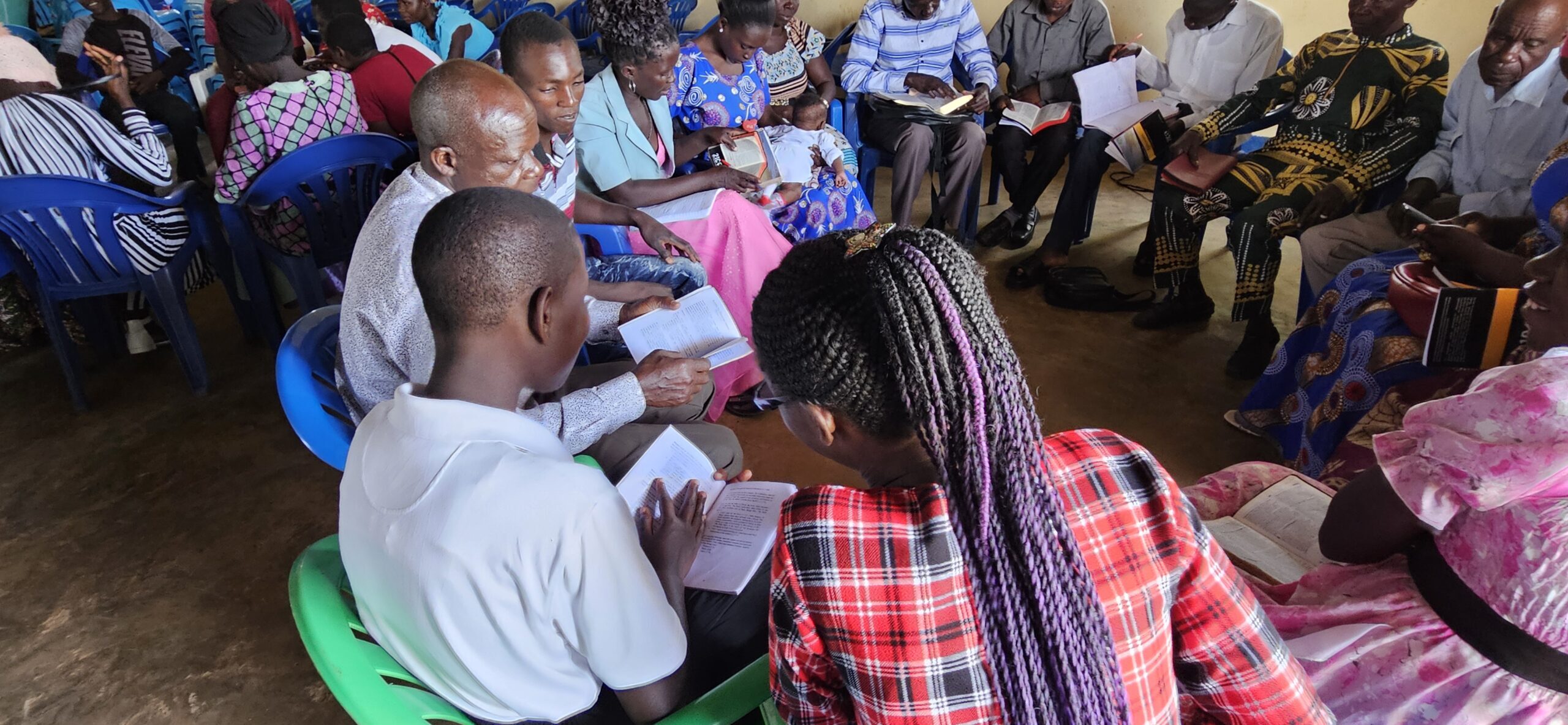
Our goal at 21C is to bring Biblical training to every church leaders in the world.

The Bible does not outline a specific process by which we are to identify those leaders in our churches. It seems that the appointment of these leaders was consistent with a general consensus regarding their qualification. 

That is, whatever else may have been involved in the selection process, these leaders were commonly known to posses certain personal characteristics that were readily apparent in their lives. We can summarize these into five broad categories. 

Character

In a time when personal charisma and leadership skills are the measure of a potential leader, it’s significant to note that when the Bible sets out criteria for an elder, only character is mentioned. These character traits are outlined clearly in Paul’s letters to Titus and Timothy, and can be broadly summarized into four categories: family life, personal life, public life, and biblical life.

Family Life

Whatever other nuances may be given to the phrase “husband of one wife,” it is clear that an elder must be a faithful spouse. Similarly, the children (specifically, those still young enough to be living at home under the care of their parents), must be what we would consider “good kids.” In other words, an elder must have a sound, healthy marriage and family. 

Personal Life

A variety of terms are used to describe the personal life of an elder, including “blameless,” “disciplined,” “upright,” and “gentle.” Interestingly, many of the descriptions list things the elder is NOT to be. An elder is not to be “quarrelsome,” “violent,” “a lover of money,” “overbearing,” “a recent convert,” or “violent.” In short, an elder must be a person who has personal maturity, self-control, and is able to look beyond self.

Public Life

An elder must have a good reputation with the community in general, and must be “hospitable.” The word “hospitable” is generally applied to our approach toward people we don’t know. An elder is someone who is welcoming and caring not just for friends and family, but for the entire community.

Biblical Life

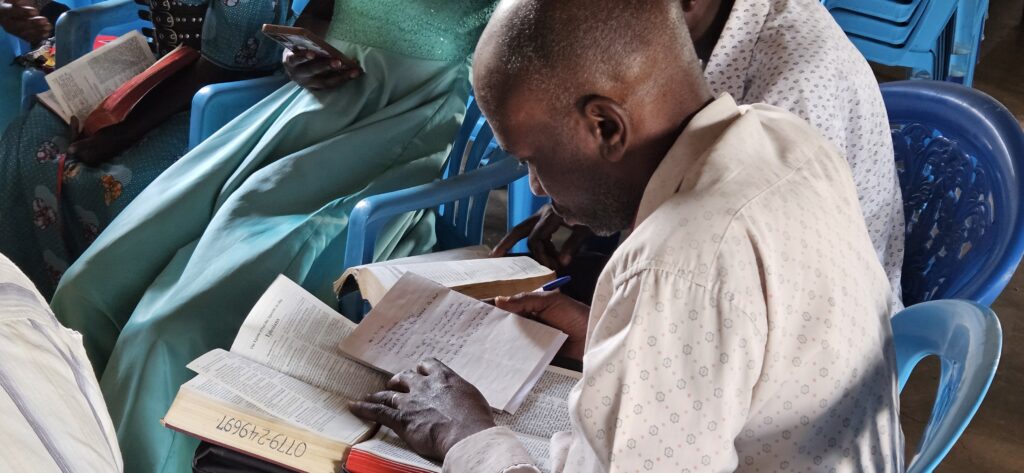
Paul tells Titus that an elder must be able to “encourage others by sound doctrine” and “refute those who oppose it.” An elder must have a solid, living, practical understanding of Scripture. That kind of biblical life suggests regular time spent studying and reflecting on that Scripture, along with lots of experience in applying it to life.

We need healthy church leaders.

As churches, we need strong, healthy leaders in order to positively impact the world around us for the cause of Christ. Developing those healthy leaders requires incredible intentionality, patience, and, most importantly, the work of the Holy Spirit.

That’s why we’re reimagining how pastoral training works in the majority world by developing a model of exponential growth. We train pastors how to read, understand, and teach scripture. With that Biblical training, they can begin to grow in their Character, Family Life, Personal Life, Public Life, and Biblical life. Then, we equip them to teach what they have learned to others, so that entire regions can be shaped into the image of Christ.